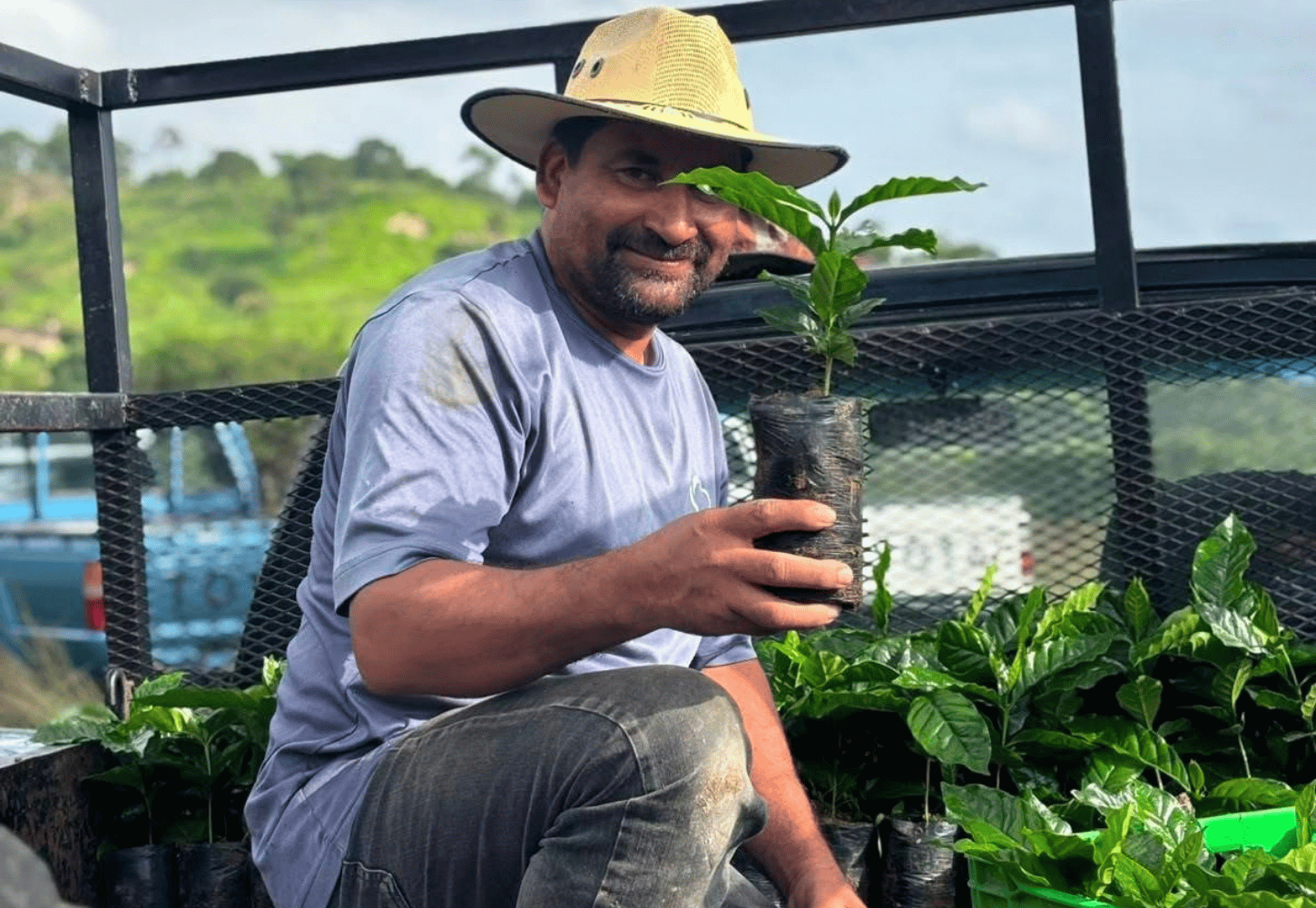
The photograph featured in this article was provided by APROCAOH (Asociación de Productores Cafetaleros de Occidente de Honduras), a cooperative of coffee producers in western Honduras. We are grateful for the opportunity to share the people and communities behind our Seasonal Honduran Ocotepeque Coffee.
A good cup of coffee starts long before the beans reach your local coffeehouse or home.
Behind every cup is a network of people, places, and decisions; from the farmers who grow the coffee to the way those beans are sourced, transported, roasted, and prepared. The choices made at each stage have an impact on communities, livelihoods, and the environment.
That’s why ethical coffee matters.
For coffee drinkers, choosing ethically sourced coffee is one way to support more responsible practices throughout the coffee supply chain. At Good Earth Coffeehouse, ethical choices are part of how we think about coffee, from Rainforest Alliance Certified and Fairtrade Certified beans to responsible sourcing and environmental considerations.
But what does “ethical coffee” actually mean? And how can your everyday coffee choices make a difference?
What Is Ethical Coffee?
Ethical coffee is coffee that considers more than just the taste of the final cup.
It looks at how coffee is grown, who grows it, how farmers and workers are treated, and what impact coffee production has on the coffee-growing community and environment.
There isn’t one single definition of ethical coffee, but responsible coffee practices can include:
- Certifications that support fairer trading conditions for farmers
- Responsible sourcing that considers relationships, quality, and supply-chain practices
- Environmental choices that help protect the land where coffee is grown
- Sustainable farming practices that support the long-term health of coffee-growing communities
- Support for health and education in the coffee-growing community
- Transparency around where coffee comes from and how it reaches your cup
These considerations are particularly important because coffee production depends on both people and the natural environment.
What Does Certified Coffee mean for Coffee Drinkers?
When you choose a certified coffee, you’re not simply choosing a particular flavour profile or roast.
You’re also supporting a system that aims to create more equitable conditions for the people who grow the coffee.
That doesn’t mean every challenge facing coffee farmers is solved by certification. Ethical sourcing is complex, and there is always more work to do. However, certification can be one valuable tool for supporting more responsible coffee supply chains.
For coffee drinkers, choosing Rainforest Alliance Certified coffee means the sourcing has been checked by someone other than the people selling it. It is a practical way to look for coffee that carries more transparency, more accountability, and greater consideration for the farms and people behind the beans.
What is the Rainforest Alliance Certification?
One of the important ways Good Earth supports responsible coffee production is through Rainforest Alliance Certified coffee. Our standard roasts, such as the Villa Esperanza, Monteverde, Espresso Global Village and Cooxupé Decaf are Rainforest Alliance Certified.
The Rainforest Alliance certification focuses on both environmental and social sustainability, with standards designed to consider the farms, workers, communities, and ecosystems behind certified coffee. Farms are expected to meet criteria connected to forest conservation, water management, worker rights and conditions, ecosystem protection, wildlife conservation, soil and water care, and waste management.
The impact of that certification comes partly from accountability. Every farm behind this coffee is audited by independent third parties against the Rainforest Alliance standard.
Certification also is not a one-time award. Farms are re-audited on an ongoing basis to keep it, helping ensure that responsible farming practices, worker protections, and environmental care remain part of the long-term conversation rather than a single moment in time.
For coffee, that’s especially meaningful because coffee farms exist within some of the world’s most biologically diverse regions.
Why Rainforest Alliance Certification Matters
Rainforest Alliance’s approach to sustainable coffee also reflects three important goals:
- Protect biodiversity: Safeguard forests, wildlife, and natural ecosystems from degradation.
- Support communities: Improve social and economic conditions for rural farmers and workers.
- Drive market transformation: Encourage more responsible practices across the coffee industry by connecting sustainability with consumer choices, business decisions, and long-term market change.
In other words, we’re not only thinking about the coffee plant. We’re thinking about the environment around it, the people who grow it, and the broader coffee system it is part of.
Fairtrade: Supporting Farmers and Communities
Another important part of ethical coffee is Fairtrade.
Fairtrade certification is designed to support farmers through standards around pricing, working conditions, community development, and environmental practices. The system can also provide premiums that producer organizations can invest in projects that benefit their communities. Fairtrade premiums support community initiatives such as education, including teacher salaries and school supplies.
Fairtrade is one way to help create greater stability and opportunity for coffee-growing communities.
Responsible Sourcing: Knowing Where Coffee Comes From
Ethical coffee also starts with understanding its origins.
Coffee is grown in countries around the world, with each region offering its own growing conditions, traditions, and farming communities. Climate, elevation, soil, varietal, and farming practices can all influence the final cup.
Responsible sourcing means looking beyond the bean itself and considering the people and communities behind it.
For coffee companies, such as roasters, importers, and retailers, that can mean building relationships with producers, working with trusted sourcing partners, understanding where coffee comes from, and considering the conditions in which it is produced.
At Good Earth, our relationship with Reunion Coffee Roasters helps connect us with coffee producers and the origins behind the beans we serve.
Coffee and the Environment
Coffee depends on a healthy growing environment.
Coffee plants grow in specific climates and can be sensitive to changes in temperature, rainfall, pests, and other environmental conditions. Protecting and restoring the land where coffee is grown is therefore important not only for the environment, but also for the future of coffee itself.
Environmental and regenerative choices in coffee production can include practices such as:
- Growing coffee under shade trees
- Protecting soil health
- Reducing unnecessary agricultural inputs
- Reusing organic coffee byproducts
- Protecting surrounding ecosystems and biodiversity
- Using water and other resources thoughtfully
Some coffee-growing communities focus on regenerative farming and are finding ways to make farming practices more environmentally responsible while also supporting their livelihoods.
For example, coffee pulp, the material left over when coffee cherries are processed, can be repurposed as fertilizer rather than simply becoming waste, helping return nutrients to the soil.
These individual choices may seem small, but collectively they can help restore soil health, support biodiversity, and contribute to more resilient coffee-growing communities.
Why Sustainability Matters for the Future of Coffee
Environmental sustainability isn’t just about protecting forests, soil, and water. It’s also about protecting the future of coffee itself.
Coffee farmers depend on predictable growing conditions to produce healthy crops. Environmental changes can make that increasingly challenging.
Supporting responsible agricultural practices can help coffee-growing communities build resilience while protecting the ecosystems that coffee depends on.
This is particularly important for specialty coffee, where the unique characteristics of a region can be part of what makes a coffee special.
When we protect those landscapes, we’re helping protect the origins and communities behind the coffees we enjoy.
Ethical Coffee Is About People, Too
It’s easy to focus on the environmental side of sustainability, but ethical coffee is ultimately about people.
Every coffee bean represents the work of farmers, pickers, processors, exporters, roasters, baristas, and many others who help move coffee from a farm to a cup.
For coffee to be truly sustainable, the people within that supply chain need to be part of the conversation.
Fairer prices, safe working conditions, access to resources, education, training, and opportunities for community development can all contribute to stronger coffee-growing communities.
When those communities are supported, coffee has a better chance of being produced sustainably for generations to come.
What Can Coffee Drinkers Do?
You don’t have to be a coffee expert to make more informed choices.
Here are a few simple ways to think about the coffee you buy:
Look for certifications
Certifications such as the Rainforest Alliance and Fairtrade can provide information about the standards and practices behind a coffee.
Learn where your coffee comes from
Look for coffees that share information about their country, region, cooperative, or farming community.
Knowing the origin of your coffee gives you a better understanding of the people and places behind it.
Ask questions
If you’re curious about a coffee, ask your coffeehouse or roaster about its sourcing. Where does it come from? Who grows it? How is it processed?
The more we understand about coffee’s journey, the easier it becomes to make informed choices.
Consider your everyday habits
Ethical choices aren’t limited to how coffee is sourced. Bringing a reusable cup, reducing waste, choosing thoughtfully packaged products, and considering how we use resources can all contribute to a more responsible coffee culture.
No single choice solves every sustainability challenge. What matters is continuing to make better choices wherever we can.
Frequently Asked Questions About Ethical Coffee
What does ethical coffee mean?
Ethical coffee refers to coffee produced and sourced with consideration for farmers, workers, communities, and the environment. This can include fair trading practices, responsible sourcing, sustainable farming, and environmental stewardship.
Is certified coffee better for the environment?
Certified coffee may include environmental standards intended to encourage more sustainable agricultural practices. However, environmental impact depends on many factors throughout the coffee supply chain.
Why does coffee sourcing matter?
Sourcing matters because the decisions made when purchasing coffee can affect farmers, farming communities, and the environments where coffee is grown. Responsible sourcing considers these factors alongside coffee quality.
How can I make more ethical coffee choices?
Look for certifications such as the Rainforest Alliance, learn about where your coffee comes from, ask questions about sourcing, and consider everyday choices that reduce waste and resource use.
< Back to Blog